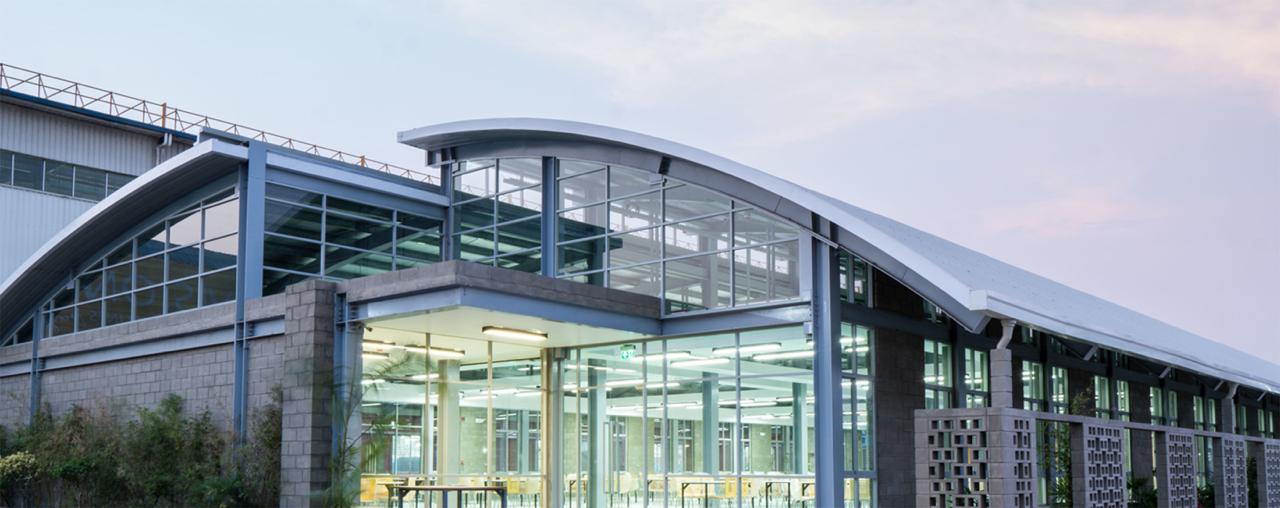
Sustainability is no longer an afterthought in Indian construction, it is fast becoming a baseline expectation. As industries, developers, and government bodies push towards greener infrastructure, green building certifications like IGBC (Indian Green Building Council) and LEED (Leadership in Energy and Environmental Design) have emerged as credible benchmarks for measuring a building's environmental performance. And within this growing movement, steel roofing has quietly become one of the most powerful contributors to earning those certifications. Here is a closer look at why.
LEED India, the IGBC's green building rating system, is a comprehensive tool for assessing a building's performance across categories such as site selection and planning, water management, energy efficiency, materials and resources, and interior environment quality. Buildings accumulate points based on their performance in these categories, determining their certification status as Platinum, Gold, Silver, or LEED Certified.
As of recent data, IGBC has registered more than 19,330 projects with a green footprint of over 15.90 billion square feet, with over 8,000 projects certified and fully operational across India. These numbers reflect the scale at which green construction is being adopted and material choices like steel roofing are central to achieving these benchmarks.
Yes — and across multiple categories at once. Unlike many conventional roofing materials that contribute to just one aspect of sustainability, steel roofing impacts several certification criteria simultaneously.
Steel roofing often contains between 25% and 95% recycled content, supporting LEED credits for the use of recycled materials. Even better, steel is 100% recyclable at the end of its life cycle, unlike traditional roofing materials that usually end up in landfills. For every ton of steel recycled, 2,500 pounds of iron ore, 1,400 pounds of coal, and 120 pounds of limestone are conserved. Steel building products can be credited with the maximum number of points for the Materials and Resources Credit aspect of the LEED rating system under Sections 4.1 and 4.2.
This directly maps to the Materials and Resources category in both LEED and IGBC frameworks, where the use of recycled and recyclable materials is explicitly rewarded.
India's industrial cities face significant urban heat island challenges, where dense construction and heat-absorbing surfaces drive up ambient temperatures and increase cooling loads. Steel roofing, particularly when finished with reflective Galvalume or
PVDF coatings, directly addresses this.
Metal roofs are synonymous with energy efficiency. Their natural reflectivity and heat-emissive properties reduce heat absorption, helping buildings stay cooler and less reliant on-air conditioning. These qualities make metal roofing an excellent candidate for LEED points under the Energy and Atmosphere category.
Cool roofs counter the urban heat island effect by reflecting incoming solar radiation, reducing temperatures inside buildings and mitigating cooling demand across an entire city. For IGBC and LEED evaluators, this is a measurable, documentable advantage.
One of the less discussed but highly relevant benefits of self-supported steel roofing is the precision with which panels are manufactured and installed. Each component is designed and fabricated to exact specifications, minimising excess material and on-site waste, a key metric for certification standards.
In a country where construction waste management is an increasing regulatory concern, this precision-driven approach helps project owners demonstrate compliance with the Waste Management criteria in both IGBC and LEED evaluations.
Metal roofing panels can interlock without needing a penetrating fastener by using standing seams, which can easily support solar panels. In this way, metal's ability to be formed to interlock can help reduce the embodied energy of a building over the course of its lifespan.
For Indian industrial buildings pursuing green certification, a steel roof that is solar-ready from day one is a significant strategic advantage. It not only contributes to renewable energy credits but also positions the facility for long-term energy cost reduction.
Pre-Engineered Buildings are particularly well-positioned to benefit from these certifications because every structural and roofing element is designed together as an integrated system. Steel structures closely align with green building certification criteria such as LEED, with performance supporting energy conservation, waste reduction, and resource efficiency; three pillars of sustainable construction.
When a Pre-Engineered Building incorporates self-supported steel roofing from the design stage itself, the building is far better placed to accumulate the certification points needed across multiple IGBC and LEED categories simultaneously.
LEED certification typically increases property values by 3% to 7% and can reduce operating costs through improved energy efficiency and potential utility rebates. For industrial and commercial project owners in India who are increasingly dealing with rising energy costs, tenant expectations around sustainability, and government green building mandates, the answer is clearly yes.
At MB Engineering, we understand that a roofing solution today needs to do more than just protect a building from the elements, it needs to contribute to a larger sustainability goal. Whether you are targeting IGBC certification, aiming for a LEED rating, or simply building a more energy-efficient and future-ready facility, our steel roofing systems are designed to help you get there. Speak with our team today and let us show you how the right roofing choice can make your green building ambitions a reality.