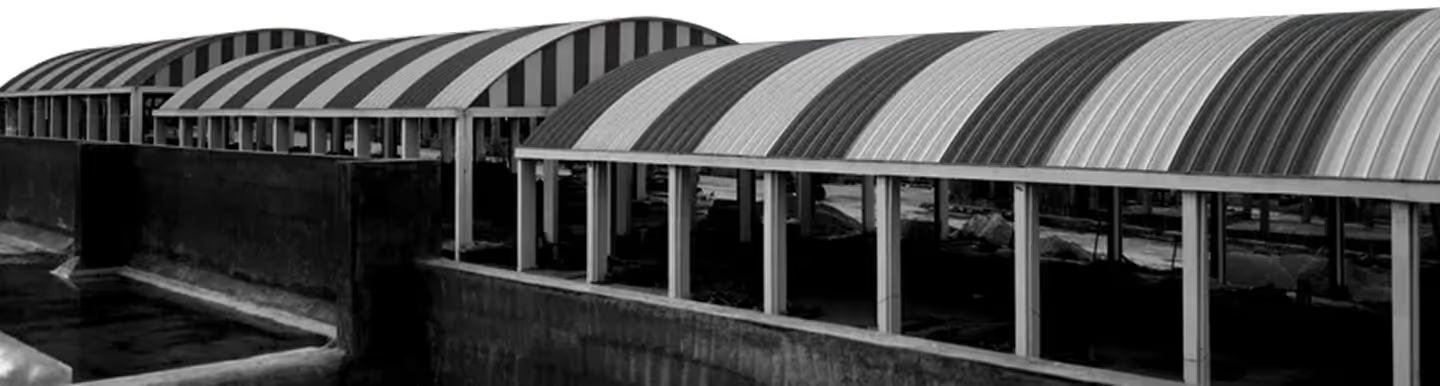
A self-supported steel roof stays stable through its curved arch design, which transfers loads as compressive forces to perimeter supports. This allows the roof to span large distances without internal columns, trusses, or purlins.
The first time most buyers hear about a self-supported steel roof, their reaction is simple: "How does that even work"?
It is a fair question. We are used to roofs that sit on a frame column, trusses, purlins, beams a skeleton of steel holding everything up. So, when someone says you can cover 30 or 40 meters of open space with a roof that needs none of that, it sounds too good to be true. It is not magic. It is engineering and it is simpler to understand than you might think.
The stability of a self-supported steel roof or trussless roofing system comes down to one fundamental principle: the arch. An arch is one of the oldest and most efficient structural forms in engineering. When properly curved, an arch does not rely on beams or columns to carry loads. Instead, it converts the weight pressing down on it into compressive forces that travel along the curve and push outward at the base. The arch does not bend, it squeezes. And steel under compression is extraordinarily strong.
This is the same principle that has held up Roman stone bridges for two thousand years. Proflex applies it using modern Galvalume steel panels formed into precise curves on-site, producing a roof that is self-sustaining across wide, unobstructed spans.
As a research paper on self-supporting metal arch roof systems published explains, these systems utilize the inherent strength of the arch form to distribute loads effectively across their span eliminating the need for internal support structures entirely.
A self-supported steel roofing system also called trussless roofing or arch roofing uses interlocked, curved steel panels as both the structural element and the weatherproof surface. There are no trusses. No purlins. No internal columns or beams cutting through your floor space.
The roof does two jobs at once: it carries its own structural load and keeps the rain out. That dual function is what makes it so efficient.
According to a technical paper on trussless roof design published by Kalinda Services, the structural mechanics of a self-supported roof are rooted in the theory of two-hinged arches. The arch is a pure compression form, it spans a large area by distributing forces through internal compressive stresses, eliminating tensile stresses altogether. The outward force at the base, known as the thrust, is managed by the support structure at the perimeter of the building.
A self-supported steel roofing does not rest on internal columns but it does need a perimeter support structure. At Proflex, this typically takes the form of RCC (Reinforced Cement Concrete) or steel beams running along the edges of the building.
These perimeter beams carry the horizontal thrust generated by the arch and transfer all loads uniformly down to the foundation. Because the load is distributed continuously along the base, the foundation requirements are more manageable than those for a conventional framed structure.
There are no point loads from columns concentrating stress in specific spots. The entire perimeter works together a much more balanced and efficient arrangement.
This is where Proflex's on-site manufacturing process plays a critical role. Steel panels are roll-formed at the project site using a mobile manufacturing unit. Each panel is curved to the precise radius required for the building's span. The panels are then mechanically seamed together with a hook-and-hem interlocking system that creates a continuous, watertight arch with no holes, nuts, bolts, or sealant at the joints.
This mechanical seaming is not just about keeping water out. It also contributes to structural integrity, the interlocked panels act as a unified shell, sharing loads across the entire surface rather than concentrating stress at individual connection points.
Once assembled, the roof SET is lifted into position using a spreader bar and crane, aligned precisely, and anchored to the perimeter beam using anchor bolts at each panel base.
This is often the question that surprises buyers most.
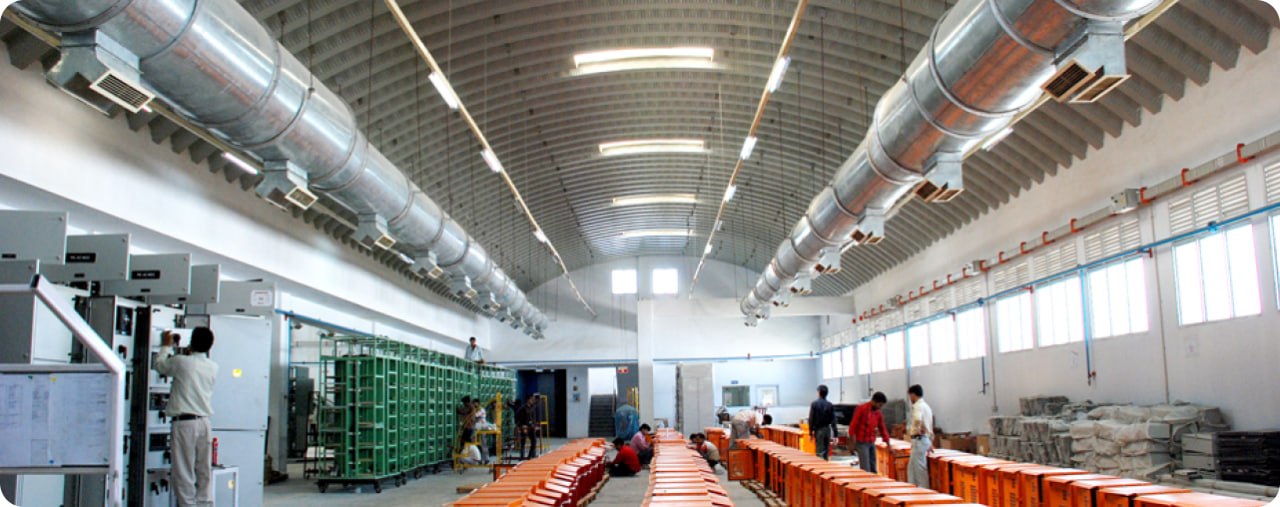
Proflex's self-supported steel roofing system can span up to approximately 30 metres or more in a single arch without any intermediate columns. For larger facilities, multiple arches are combined to cover any footprint required with length achievable in virtually unlimited increments.
This makes self-supported steel roofing ideal for:
In every case, the absence of internal columns means the entire floor area is usable no obstructions, no restricted movement for forklifts or machinery, no compromises on storage layouts.
Yes. The structural design of self-supported arch roofing systems is governed by established engineering principles and load analysis covering dead loads (the weight of the roof itself), live loads (wind, rain, and maintenance loads), and seismic considerations where applicable.
At Proflex, every project begins with a detailed structural assessment. The arch reaction data and load combinations are provided to the client's consulting engineer, who designs the perimeter support structure to handle all relevant load conditions.
The result is a roof that is not just impressive in its simplicity but engineered to perform reliably for decades.
If you are planning a warehouse, industrial shed, or large-span facility and want to understand whether a self-supported steel roofing solution is the right fit, the Proflex team is ready to help. Contact us today to discuss your project, get span recommendations, and request a quote.
A self-supported steel roof stays stable because its curved arch design transfers loads through compression rather than bending. The roof panels themselves act as the structural system, eliminating the need for internal columns, trusses, or purlins. Supported by perimeter beams and engineered according to structural load requirements, self-supported roofing systems provide large clear spans, faster installation, and efficient use of space for industrial and commercial buildings.
Q1. What exactly is a self-supported roofing system and how is it different from a conventional roof?
A self-supported roofing system uses curved steel panels that serve as both the structural framework and the roof covering. Unlike conventional roofs, it does not require trusses, purlins, or internal columns, allowing for large clear-span spaces with fewer structural components.
Q2. Is a self-supported steel roof structurally safe for large industrial and commercial facilities?
Yes. It is engineered using the proven two-hinged arch principle and designed to withstand wind, rain, live loads, and seismic forces. The system is structurally tested, code-compliant, and built for long-term performance.
Q3. Can a self-supported roof cover very large spans without any internal support?
Yes. Self-supported roofs can span up to 30 meters or more without internal columns or trusses. Multiple arches can be combined to cover larger facilities while maintaining open floor space.
Q4. Why should I choose Proflex Roofing over other steel roofing companies in India for a trussless roofing solution?
Proflex Roofing brings over 24 years of industry experience and more than 10,000 completed projects. The company offers on-site roll forming, watertight seamed roofing systems, and end-to-end engineering support for industrial, commercial, and infrastructure projects across India. The company offers on-site roll forming, watertight seamed panels, and complete engineering and installation support.
Q5. What are the key benefits of choosing a trussless roofing solution over a conventional steel frame roof?
A trussless roofing solution reduces structural steel requirements, speeds up installation, and maximizes usable floor area. It provides a durable, cost-effective roofing system for industrial and commercial buildings.
Q6. What Is a Self-Supported Steel Roof?
A self-supported steel roof is a roofing system made from curved interlocked steel panels that function as both the structural support and weatherproof covering, eliminating the need for internal trusses, purlins, or columns.