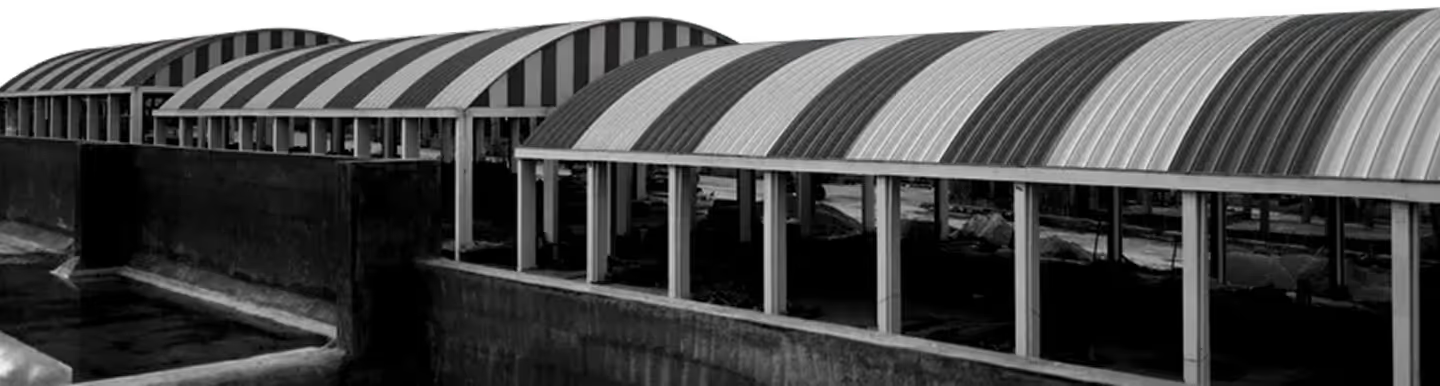
If you have watched a steel roofing project, come together, you may have noticed something unusual: a machine arrives at site, a coil of steel goes in one end, and finished curved panels come out ready to be lifted directly onto the building.
That process is on-site panel fabrication one of the most important aspects of how a quality steel roofing solution is built.
Panel fabrication transforms a flat Galvalume steel coil into finished, curved roofing panels. It involves two key steps: roll forming and crimp curving.
The result is a panel that is structurally formed and geometrically precise built to the exact dimensions of your project.
Factory-manufactured panels are pre-cut to standard lengths and transported to site. For large industrial projects, this creates real problems:
On-site fabrication eliminates all of these constraints. The steel coil arrives at site compact and damage-resistant. The mobile roll-forming unit produces panels to the exact length, profile, and curve radius required. Every panel is made for the job it will do.
Industry data confirms that on-site roll forming substantially reduces material scrap by producing to precise, field-verified dimensions rather than factory estimates.
Fewer seams. Panels formed in continuous lengths across the building's full span mean fewer joints and fewer potential points for water infiltration. Continuous-length panels are one of the most effective ways to improve the weatherproofing performance of any steel roofing solution. Better fit. Panels formed to exact site measurements fit precisely against each other and the perimeter structure no shimming, no cutting down, no workarounds.
No transit damages. Panels go from machine directly to the roof never exposed to the risks that factory-made panels face.
Faster installation. Panel production is paced to match the installation crew, keeping the project moving without waiting on deliveries or managing large panel stockpiles on a congested site.
Our On-Site Fabrication Process
We bring our mobile manufacturing unit to every project. The coil is loaded, the roll-forming and crimp-curving sequence runs to your building's specifications, and panels are produced to exact dimensions ready to lift, lock, and seam into place.
This is how we deliver roofing solutions that are watertight from day one and built to perform for 40 years or more.
Q1. What is the difference between roll forming and crimp curving in steel roofing?
Roll forming shapes the coil into the panel profile, adding ribs and seam edges. Crimp curving bends that panel into the precise arch radius needed both steps are core to our on-site steel roofing process.
Q2. Why is on-site fabrication better than factory-made panels for a roofing solution?
It produces panels to exact field-verified dimensions, eliminating waste and transit damage. Continuous-length panels mean fewer seams, directly improving waterproofing in the finished roofing solution.
Q3. Does on-site fabrication work for self-supported roofing and arch roofing systems?
Yes, each panel must be crimp-curved to a precise radius matching the span, something factory panels cannot achieve. On-site fabrication is essential to every self-supported roofing system we deliver.
Q4. How does on-site steel roofing fabrication reduce project costs?
It eliminates transport costs, cuts material waste by producing to exact lengths, and speeds installation by matching panel output to the crew's rate.
Q5. Can on-site fabrication handle irregular building shapes or custom spans?
Yes. Panels fabricated to actual site measurements adapt naturally to irregular footprints and non-standard geometries a key advantage for complex steel roofing projects.