Sustainability is no longer a buzzword for industrial businesses across India, it is now a core part of how projects are planned and evaluated. One of the most overlooked places to make a meaningful environmental impact is right above your head the roof. If you are considering a new roofing solution for your warehouse, factory, or logistics facility, you are likely weighing cost and durability. But here is a question worth adding: how does your roofing choice affect the environment over its entire lifetime?
The answer, when it comes to steel roofing, is more encouraging than most people expect.
Steel is one of the most recycled materials on the planet. According to research cited by the U.S. Environmental Protection Agency (EPA), recycled steel saves up to 74% of the energy needed to produce steel from raw materials. For every tonne of steel recycled, around 1.5 tonnes of CO2 emissions are avoided.
What makes steel roofing particularly sustainable is that this recyclability applies at both ends of the lifecycle:
This circular material loop means a steel roof you install today is not just protecting your building it actively keeps industrial waste out of the ground.
Yes, and the numbers are significant. Steel roofing, especially when treated with reflective Galvalume or PVDF coatings, reflects a large portion of solar radiation rather than absorbing it. This is the "cool roof" effect.
In practical terms for Indian industrial buildings:
For large facilities covering thousands of square metres, this reduction in energy demand adds
up to a significant environmental contribution year after year, across the full lifespan of the
building.
This is where the comparison with conventional roofing becomes most compelling. Concrete roofing carries a high embodied carbon cost energy-intensive to produce, heavy to transport, and slow to install. Bitumen and asphalt systems require energy-intensive disposal at end of life and contribute more to greenhouse gas emissions over their lifecycle.
Steel roofing, by contrast:
A lifecycle assessment comparing common roofing materials found steel consistently outperforms bitumen and concrete across global warming potential, primary energy demand, and end-of-life recyclability the three key measures used in green building evaluation.
Steel roofing solutions can contribute to IGBC and LEED credits across energy efficiency, material recyclability, and heat island reduction categories. For businesses pursuing ESG goals or green compliance on government-linked projects, a self- supported steel roofing system is a well-documented way to meet those targets without compromising structural performance.
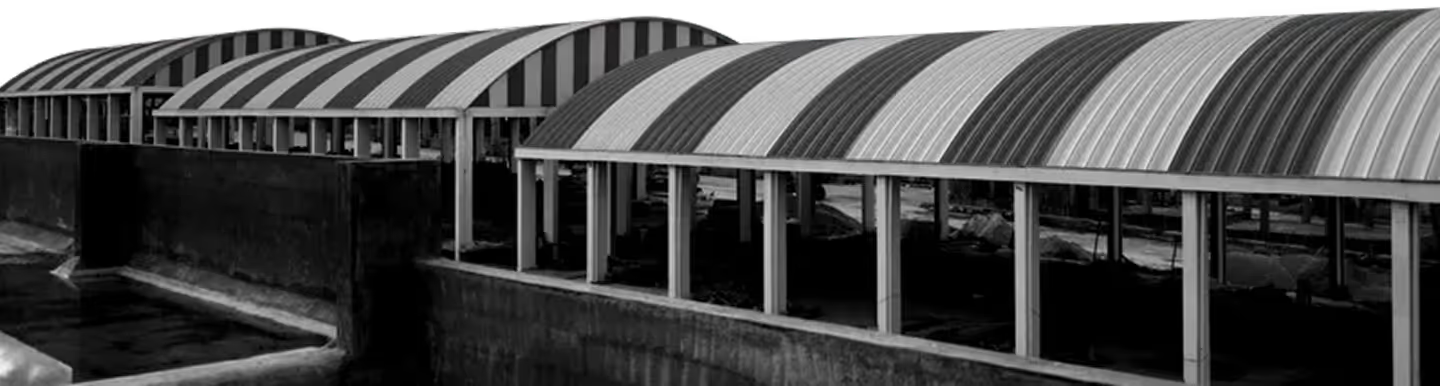
We use Galvalume steel as the foundation of every self-supported roofing system we deliver. Its reflective surface reduces heat absorption, its long lifespan reduces replacement frequency, and its full recyclability ensures nothing goes to waste. Our on-site panel fabrication eliminates excess material wastage every panel is roll-formed to exact building dimensions. For clients looking further, our systems are fully compatible with rooftop solar integration.
Q1. Is self-supported steel roofing considering a green building material in India?
Yes. Self-supported steel roofing made from Galvalume steel qualifies as a green material under IGBC and LEED criteria due to its high recycled content, heat-reflective properties, and full end-f-life recyclability. It is one of the most credible roofing solutions for businesses pursuing sustainability or ESG compliance.
Q2. How does a steel roofing solution reduce a building's carbon footprint?
A steel roofing solution cuts carbon impact in three ways: it reflects solar heat to lower cooling energy demand, it uses high recycled content reducing production emissions, and its 40 to 50-year lifespan eliminates repeated replacement cycles that consume additional energy and resources.
Q3. Can arch roofing or trussless roofing systems support solar panel installation?
Yes. Arch roofing and trussless roofing solutions are fully compatible with rooftop solar systems. The steel surface provides a stable, long-lasting mount ideal for on-site renewable energy generation without interfering with the roof's structural integrity.
Q4. Do steel roofing companies in India follow sustainable manufacturing practices?
Leading steel roofing companies in India use Galvalume panels with high recycled content and on-site roll-forming that minimizes material waste. On-site fabrication also cuts carbon emissions by eliminating long-distance transport of pre-made panels to project sites.
Q5. Is a self-supported roofing system better for the environment than a concrete roof?
Yes. A self-supported roofing system in steel has a significantly lower lifecycle environmental impact than concrete lower embodied carbon, zero landfill waste at end of life, and a reflective surface that reduces building energy consumption. Concrete carries high production emissions and contributes far more to landfill at disposal.